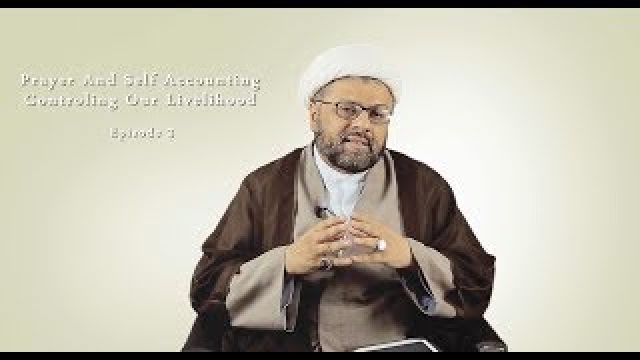
Reality of Faith 1/4

Bismillah Al-Rahman Al-Rahim wa bihi nasta'in.Wa salla Allahu ala Muhammad wa aalihi at-Tayyibeen at-Taahireen al-Masumeen. One of the most profound statements of Imam ar-Ridha, alayhi assalam, is how to perfect one's faith and one's belief and Iman.
In one of the beautiful sayings, Imam ar-Ridha, alayhi assalam, says: "la yastakmilu 'abdun haqiqat al-Iman, hatta takuna fihi khisalu thalath: at-tafakku fi 'd-Deen, wa husn at-taqdir fi'l maisha, wa as-sabr ala rizayah". Imam Al-Ridha, alayhi assalam, basically says that a servant or a human beings, Iman will not be perfect, except he has three characteristics: one is that he has knowledge about religion. He learns and gains understanding. He has at-tafakku fi 'd-Deen. That means that he actually struggles and knows the religion, the outer part of the religion, the inner part of the religion, the intricacies of the religion, the different dimensions of religion.
All this is very important in order for the person to get the kamal al-Iman, here, actually, Imam Al-Ridha, alayhi assalam, is not talking of Iman only, he says la yastakmilu 'abdun haqiqat al-Iman. That means that the person will not come to the level of the reality of faith in its perfection, except if he has these three characteristics. If he has them, then he will come to that level of perfect faith.
Number one is at-tafakku fi 'd-Deen. That means understanding religion properly. You know, religion is not to put beard or to wear hijab. This is just the outer form of religion. The reality is to understand and have tafakku. You will find that there are some people who wear hijab, but they know what hijab is properly. They are people, for example, who pray and, you know, five times a day, but with conscious concentration, with understanding, they have the depth of religion. So this is the first important thing that a person should have.
Number two, he says husn at-taqdir fi'l maisha, that means the beauty of control in a your, for example, livelihood, the beauty of control. That means there should be a beautiful control in your livelihood. What do we mean by that?
That means that, you know, when it comes to your expenses, you should control well, you should know where and where is the money coming from? How is the money coming from? How to how do I spend? Should I overspend here? Should I, for example, spend less here and so on. husn at-taqdir fi'l maisha is very, very important.
When a person realizes that the purpose of creation is not these things of the world, the purpose of creation is to get close to Allah, Subhana wa Ta'ala, he will make sure that he uses these things as just a means and he would not take it as an end in itself because the person knows that these are things which will help me to gain closer to my Lord and so on. So husn at-taqdir fi'l maisha is a very important thing. Today we will find poverty comes because there is no husn at-taqdir fi'l maisha.
Secondly, if a person doesn't know where the food is coming from, he says, OK, go and buy something from the hotel. He doesn't know who is the cook, whether he's a Muslim or a non-Muslim, how is it cooked and so on. And he gets that food that he eats that actually affects the heart and also it affects its faith. The person you find that he will not be very faithful. Why? Because the food that he has eaten has a problem. So this is number two.
And the third characteristic that Imam Al-Ridha, alayhi assalam, mentioned is wa as-sabr ala rizayah. That means patients over calamities. And, you know, when we talk about calamity, sometimes the calamities are not those calamities that are externally on us. Sometimes the problems and the adversities come because of worshiping Allah, Subhana wa Ta'ala, because of obeying Allah, Subhana wa Ta'ala.
That is why these things come. So if a person would actually want to get that perfection of faith, these are the three things that he or she can do.
InshaAllah, we will continue with the same subject in our next episode. Wa Al-Hamdulillahi Rabb Al-Alameen, wa salla Allahu ala Muhammad, wa aalihi at-Tayyibeen at-Taahireen al-Masumeen.
Bismillah Al-Rahman Al-Rahim, wa bihi nasta'in.Wa salla Allahu ala Muhammad wa aalihi at-Tayyibeen at-Taahireen al-Masumeen. Eine der tiefgründigsten Aussagen von Imam ar-Ridha, alayhi as-salam, ist, wie man seinen Glauben und seinen Iman vervollkommnen kann.
In einem der schönen Aussprüche sagt Imam ar-Ridha, alayhi as-salam: "la yastakmilu 'abdun haqiqat al-Iman, hatta takuna fihi khisalu thalath: at-tafakku fi 'd-Deen, wa husn at-taqdir fi'l maisha, wa as-sabr ala rizayah". Imam Al-Ridha, alayhi as-salam, sagt im Grunde, dass der Iman eines Dieners oder eines Menschen nicht perfekt sein wird, es sei denn, er hat drei Eigenschaften: Die erste ist, dass er Wissen über die Religion hat. Er lernt und erlangt Verständnis.
Er hat at-tafakkur fi 'd-Deen. Das bedeutet, dass er sich tatsächlich abmüht und die Religion kennt, den äußeren Teil der Religion, den inneren Teil der Religion, die Feinheiten der Religion, die verschiedenen Dimensionen der Religion.
All dies ist sehr wichtig, damit die Person den kamal al-Iman bekommt, hier spricht Imam Al-Ridha, alayhi as-salam, eigentlich nicht nur von Iman, er sagt la yastakmilu 'abdun haqiqat al-Iman. Das bedeutet, dass der Mensch nicht auf die Ebene der Realität des Glaubens in seiner Vollkommenheit kommen wird, außer wenn er diese drei Eigenschaften hat. Wenn er sie hat, dann wird er zu dieser Ebene des vollkommenen Glaubens kommen.
Nummer eins ist at-tafakku fi 'd-Deen. Das bedeutet, die Religion richtig zu verstehen. Wissen Sie, Religion bedeutet nicht, einen Bart zu tragen oder einen Hijab zu tragen. Das ist nur die äußere Form der Religion. Die Realität ist zu verstehen und tafakku zu haben. Sie werden feststellen, dass es einige Leute gibt, die Hijab tragen, aber sie wissen nicht, was Hijab richtig ist. Es sind Menschen, die zum Beispiel beten und, Sie wissen schon, fünfmal am Tag, aber mit bewusster Konzentration, mit Verständnis, haben sie die Tiefe der Religion.
Das ist also die erste wichtige Sache, die eine Person haben sollte.
Nummer zwei, er sagt husn at-taqdir fi'l maisha, das bedeutet die Schönheit der Kontrolle in Ihrem, zum Beispiel, Lebensunterhalt, die Schönheit der Kontrolle. Das bedeutet, dass es eine schöne Kontrolle in Ihrem Lebensunterhalt geben sollte. Was meinen wir damit?
Das bedeutet, dass, wissen Sie, wenn es um Ihre Ausgaben geht, sollten Sie gut kontrollieren, Sie sollten wissen, wo und woher das Geld kommt? Woher kommt das Geld? Wie viel gebe ich aus? Sollte ich hier zu viel ausgeben? Sollte ich zum Beispiel hier weniger ausgeben und so weiter. husn at-taqdir fi'l maisha ist sehr, sehr wichtig.
Wenn eine Person erkennt, dass der Zweck der Schöpfung nicht diese Dinge der Welt sind, sondern der Zweck der Schöpfung ist, Allah, Subhana wa Ta'ala, nahe zu kommen, dann wird sie sicherstellen, dass sie diese Dinge nur als Mittel benutzt und sie nicht als Selbstzweck nimmt, weil die Person weiß, dass dies Dinge sind, die mir helfen, meinem Herrn näher zu kommen und so weiter. Also husn at-taqdir fi'l maisha ist eine sehr wichtige Sache. Heute werden wir feststellen, dass die Armut kommt, weil es keinen husn at-taqdir fi'l maisha gibt.
Zweitens, wenn ein Mensch nicht weiß, woher das Essen kommt, sagt er, OK, geh und kauf etwas im Hotel. Er weiß nicht, wer der Koch ist, ob er ein Muslim oder ein Nicht-Muslim ist, wie es gekocht wird und so weiter. Und er bekommt dieses Essen, das er isst, das tatsächlich das Herz beeinflusst und auch seinen Glauben beeinflusst. Die Person, die Sie finden, wird nicht sehr gläubig sein. Warum? Weil das Essen, das er gegessen hat, ein Problem hat.
Das ist also Nummer zwei.
Und die dritte Eigenschaft, die Imam Al-Ridha, alayhi as-salam, erwähnte, ist wa as-sabr ala rizayah. Das bedeutet Patienten über Kalamitäten. Und wissen Sie, wenn wir über Kalamitäten sprechen, sind die Kalamitäten manchmal nicht die Kalamitäten, die von außen auf uns einwirken. Manchmal kommen die Probleme und die Widrigkeiten wegen der Anbetung Allahs, Subhana wa Ta'ala, wegen des Gehorsams gegenüber Allah, Subhana wa Ta'ala.
Das ist der Grund, warum diese Dinge kommen. Wenn also eine Person tatsächlich diese Vollkommenheit des Glaubens erlangen möchte, sind dies die drei Dinge, die er oder sie tun kann.
InshaAllah, wir werden mit dem gleichen Thema in unserer nächsten Folge fortfahren. Wa Al-Hamdulillahi Rabb Al-Alameen, wa salla Allahu 'ala Muhammad, wa aalihi at-Tayyibeen, at-Taahireen, al-Masumeen.