The Tragedy Of Karbala - 6/10

You know, mothers, mothers are a very ajib creation, right? The love they have, the heart they have, the amount of forgiveness they have, they will sacrifice their own comfort for our comfort. If we begin to become sick, they will actually wish that, you know what? Give me that sickness. I would rather you sleep all night. We leave our home and she will sit there and she will give us du'as. We come home sometimes in the middle of the night thinking the entire house is asleep. We will pass by her room, and she will faintly call out your name to make sure you are okay. And she won't sleep until you are snuggled in your bed, and you are comfortable and you are fast sleep and you are safe.
The innate nature of the mother is that she will, like I said, protect you from harm. If that means she puts her own self in harm, take your struggle away. If that means that she herself is in struggle. But the mothers of Karbala were not like that. There is something even more ajib and strange about the mothers of Karbala, that they would go against that own innate nature, to take the struggle away from their child. In fact, they would prepare their children for a battle, for bloodshed, to sacrifice their own life.
No mother wants to still be alive and bury her child, Nobody. The du'a also always is that if Allah wishes to take me, take me before they take you. But we see on the day of Ashura, Bibi Zaynab is prepping her sons for a battle. It is giving them a talk in the tent. Because while the innate nature is to protect your child, what is m
ore afdhal and grand than that innate nature is for me to protect Husayn. And you look at the way that Bibi Zaynab would mourn certain people, and not mourn other people. And you would begin to realize how much love she had for her brother Husayn. Throughout the battles of Ashura, throughout the battles of Ashura, when the Shaheed would call out in the middle of the war, in the middle of the battlefield for Imam Husayn to come and save them, or be with them, she would remain in the tent.
But the love that Bibi Zaynab had for Imam Husayn was so strong that the only time that she came out of the tent was when Ali Akbar said, alaykum minni as-salam ya abatah, when he called out for his father. Why? Because Zaynab knew that Akbar was the most difficult shahadat of Imam Husayn's mission. And to share in the grief of my brother, I'm going to come running out and share in that grief with Imam Husayn. Awn and Muhammad now approached their uncle, Imam Husayn, and said, mamu, if you can please, we are ready to go give our lives to this mission. They were not even Baligh yet. Awn and Muhammad were two brothers that were some say twelve, thirteen, ten. They were less than Baligh. To the point where they weren't even able to mount themselves onto the horses. I'm trying to create an image for all of you. Imam Husayn time and time again would say look, I can't give you permission. I can't give you permission. I can't give you permission until a moment comes where Bibi Zaynab says, Abbas, tell Husayn to come and see me in my tent.
Husayn goes running Bibi Zaynab calls him. Bibi Zaynab says, Bhayad, do you remember in Siffin when eight year old Abbas was fighting the battle and that battle was won, and the look on the face of our Baba Ali, had so much pride in it that that's my Abbas. That's my Abbas. That's my Abbas. Yes, I remember that Zaynab of course I was there. I remember that do you want to strip me of that pride? All I have to give for your mission are my two sons. Let me give you my two sons for your mission.
The books tell us that the two came, Imam Husayn had two small green amamas. Imam Husayn placed one amama on Awn's head. Abul Fadhl placed the other amama Muhammad's head. Imam Husayn mounted one child on the horse. Abul Fadhl mounted one child on one horse. Both of them said to Imam Husayn that mamu, if it's okay, can you just take us to the khaima, the tent where our mother is? We want to give her our last salams, if that's okay with you? Imagine now these two young boys, 12 and 13. My mothers in'sha Allah listening. How hard is it for you to change your innate nature from protecting your child to sacrificing your child? These two small boys on these massive horses come near the tent. Amah. We are going now, Khuda Hafiz. Accept our salam.
What happened to Bibi Zaynab? I have no idea. These two roared into the maidan of Karbala. These were the grandchildren of Amir al-Mu'minin, 30 plus kuffar they killed. Umar Ibn Sa'ad, separated those two. And one by one they began to, of course, strike them with swords, and strike them with rocks until, of course, they fell from the horse. As-salamu alayka ya Aba Abdillah!
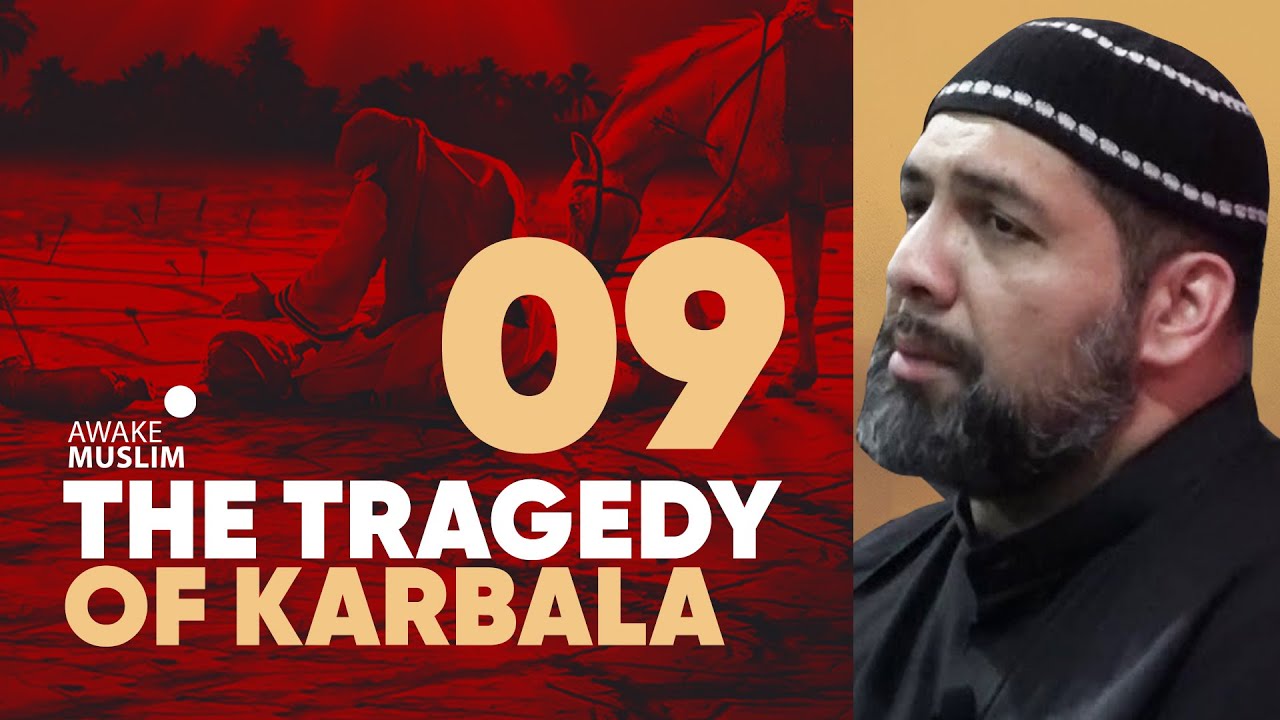
Abul Fadhl goes running. Imam Husayn goes running. They take each of them back to the khaima. Now everybody is waiting. What will be Zaynab's reaction? Zaynab's tent opens. Bibi Zaynab comes walking out. Awn and Muhammad are lying there, in front of her. The reports say that Bibi Zaynab yield down on the heart of Karbala. Place one hand on the chest of Awn, place one hand on the chest of Muhammad. Ya Allah! Accept Zaynab's qalil sacrifice.
Sapete, le madri, le madri sono una creazione molto ajib, giusto? L'amore che hanno, il cuore che hanno, la quantità di perdono che hanno, sacrificano il loro benessere per il nostro. Se iniziamo ad ammalarci, preferirebbero ammalarsi loro stesse. Preferisco che tu dorma tutta la notte. Usciamo di casa e lei si siede lì e fa du'as per noi. A volte torniamo a casa nel cuore della notte, pensando che tutti stiano dormendo. Passiamo davanti alla sua stanza e lei chiama sottovoce il tuo nome per assicurarsi che tu stia bene. E non si addormenterà finché non sarete accoccolati nel vostro letto, non sarete comodi, non dormirete velocemente e non sarete al sicuro.
La natura innata della madre è che, come ho detto, vi proteggerà dal male. Anche se ciò significa che lei stessa si metterà in pericolo, ti toglie questo problema. Se ciò significa che lei stessa è in pericolo. Ma le madri di Karbala non erano così. C'è qualcosa di ancora più ajib e strano nelle madri di Karbala, che andavano contro la loro stessa natura, cioè risolvere i problemi ai loro figli. Al contrario, loro preparavano i loro figli alla battaglia, allo spargimento di sangue, a sacrificare la propria vita.
Nessuna madre vuole essere ancora viva e seppellire il proprio figlio, nessuno. La du'a è sempre che se Allah vuole prendermi, prenda me prima che prendano te. Ma vediamo che il giorno dell'Ashura, Bibi Zaynab sta preparando i suoi figli per una battaglia. Sta facendo loro un discorso nella tenda. Perché mentre la natura innata è quella di proteggere il proprio figlio, ciò che è più afdhal e grandioso di questa natura innata è proteggere Husayn.
E si vede il modo in cui Bibi Zaynab piangeva in lutto certe persone e non ne piangeva altre. E si comincia a capire quanto amore avesse per suo fratello Husayn. Durante le battaglie dell'Ashura, quando gli Shaheed, nel mezzo della guerra, nel mezzo del campo di battaglia, chiamavano l'Imam Husayn perché venisse a salvarli o a stare con loro, lei rimaneva nella tenda.
Ma l'amore che Bibi Zaynab nutriva per l'Imam Husayn era così forte che l'unica volta che uscì dalla tenda fu quando Ali Akbar disse: alaykum minni as-salam ya abatah, quando chiamò suo padre. Perché? Perché Zaynab sapeva che Akbar era lo shahadat più difficile della missione dell'Imam Husayn. "E per condividere il dolore di mio fratello, verrò di corsa a condividere il dolore con l'Imam Husayn." Awn e Muhammad si avvicinarono allo zio, l'Imam Husayn, e gli dissero: "Mamu, se puoi, siamo pronti a dare la nostra vita a questa missione". Non erano ancora Baligh. Awn e Muhammad erano due fratelli che avevano, secondo alcuni, dodici, tredici, dieci anni. Erano meno che Baligh. Al punto che non erano nemmeno in grado di salire a cavallo. Sto cercando di creare un'immagine per tutti voi. L'Imam Husayn diceva sempre: "Non posso darvi il permesso. Non posso darvi il permesso. Non posso darvi il permesso." Finché non arriva un momento in cui Bibi Zaynab dice: "Abbas, di' a Husayn di venire a trovarmi nella mia tenda".
Husayn corre e Bibi Zaynab lo chiama. Bibi Zaynab dice: "Bhayad, ti ricordi a Siffin quando Abbas, otto anni, stava combattendo in battaglia e quella battaglia fu vinta, e lo sguardo del nostro Baba Ali era così orgoglioso che quello era il mio Abbas. Questo è il mio Abbas. Questo è il mio Abbas. Sì, mi ricordo che Zaynab, certo, ero lì. Mi ricordo. Che vuoi privarmi di quell'orgoglio? Tutto quello che ho da dare per la tua missione sono i miei due figli. Lascia che ti dia i miei due figli per la tua missione.
I libri raccontano che i due accorsero, l'Imam Husayn aveva due piccoli amama verdi. L'Imam Husayn pose un'amama sulla testa di Awn. Abul Fadhl pose l'altra amama sulla testa di Muhammad. L'Imam Husayn montò un bambino sul cavallo. Abul Fadhl montò l'altrp su un cavallo. Entrambi dissero all'Imam Husayn: "Mamu, se ti va bene, puoi portarci alla khaima, la tenda dove si trova nostra madre? Vogliamo darle i nostri ultimi saluti, se per te va bene? Immaginate ora questi due ragazzini di 12 e 13 anni. Le madri, insha'Allah, stanno ascoltando. Quanto è difficile per voi cambiare la vostra natura innata dal proteggere il vostro bambino al sacrificarlo? Questi due ragazzini su questi cavalli enormi si avvicinano alla tenda. Amah, ora andiamo, Khuda Hafiz. Accetta i nostri salams.
Cosa è successo a Bibi Zaynab? Non ne ho idea. Questi due entrarono ruggendo nel maidan di Karbala. Erano i nipoti di Amir al-Mu'minin, uccisero oltre 30 kuffar. Umar Ibn Sa'ad ordina di separarli. E uno dopo l'altro cominciarono a colpirli con le spade e a colpirli con le pietre finché, naturalmente, caddero da cavallo. As-salamu alayka ya Aba Abdillah!
Abul Fadhl corre. L'Imam Husayn corre. Ognuno di loro viene riportato al khaima. Ora tutti aspettano. Quale sarà la reazione di Zaynab? La tenda di Zaynab si apre. Bibi Zaynab esce. Awn e Muhammad sono sdraiati lì, davanti a lei. I resoconti dicono che Bibi Zaynab si accascia sulla terra di Karbala. Posa una mano sul petto di Awn, una mano sul petto di Maometto. Ya Allah! Accetta il sacrificio qalil di Zaynab.