Islamic Guidelines For Divorce

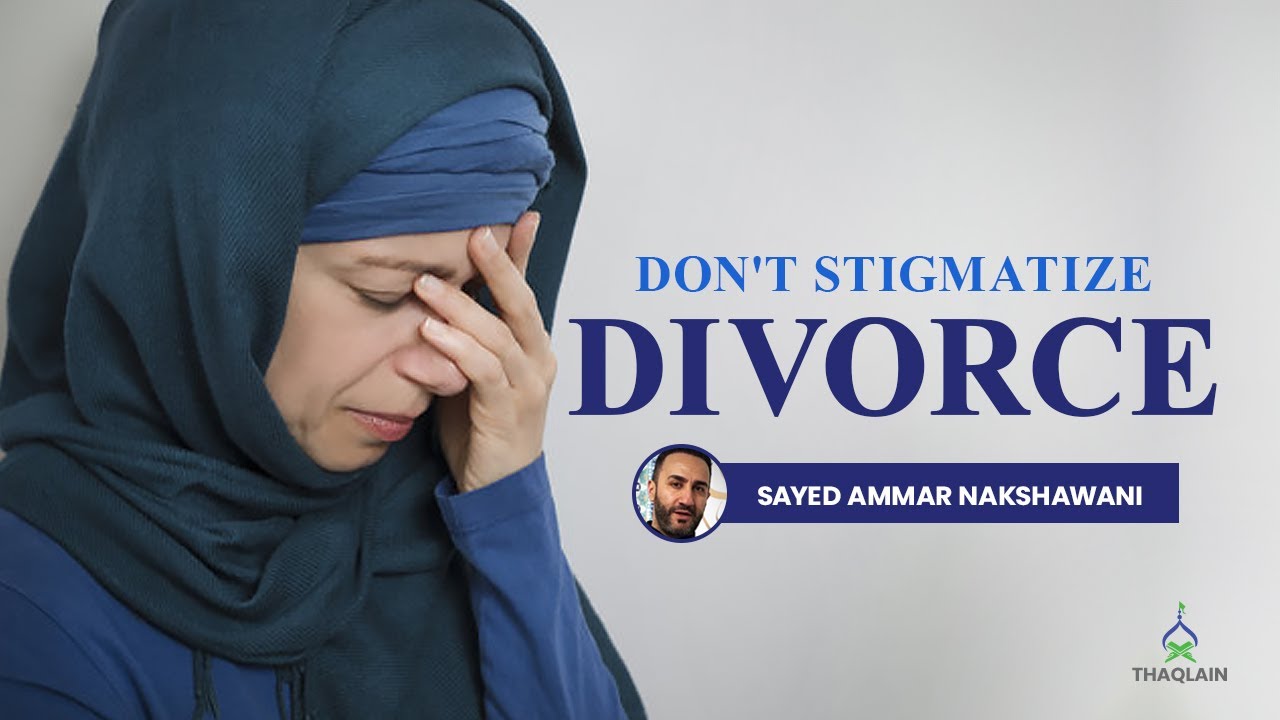
Allah says: "wa 'ashiruhunna bil ma'ruf" (4:19). Live with your wives in kindness, equity. Be gentle with them, be kind to them. Even in a situation where there is divorce, when people get divorced, the viciousness comes out. People that you would think they are so pious, they read Dua' Khumayl, they cry for Imam Al-Husayn. When there is a divorce, there is no more Deen.
People forget the Shari'ah. This is why if you look at Surah at-Talaq, the chapter on divorce in the Qur'an. Allah mentions Taqwa very much. And most of the time in the Qur'an, when Allah speaks about Taqwa, it is in the context of our social interactions. This is when there is really any need for Taqwa, honouring the rights of others. What does Allah say, in the event that the relationship is going south?
"Wa idha tallaktumu an-nisa" (65:1). When you divorce, and when you divorce women. When you divorce a woman in the Islamic tradition, the marriage does not just dissolve. You recite the sigha, the talaq, and then there is a waiting period. The woman has to experience three menstrual cycles.
This is the 'Iddah. During this time period, this is the time where there should be an attempt to reconcile. You do not kick the woman out of the house. You still live with each other, during this time period. So perhaps Allah will soften the hearts.
Now, during this time period, you have two choices as the husband. You take her back, you retain her, or you let her go. But look at what Allah says: "Wa idha tallaktumu an-nisa, fa balaghna ajalahum" (2:231). They are reaching the end of their term, the 'Iddah, the waiting period. Allah says: "fa amsikuhunna bi ma'ruf" (2:231). If you feel that you can reconcile, retain them in kindness. Do not take them back and say that I should have divorced you, and you keep on reminding. Take them back in kindness, let bygones be bygones.
Take them back in kindness, "aw sahrihunna bi ma'ruf" (2:231). Or let them go. Let the divorce take its full course, and let them go in kindness. In both scenarios, whether you decide to keep her as your wife, Allah says you have to practice ma'ruf. And if you decide to divorce her, you do not take the Mahar and run, you pay her her dues. You do not hire lawyers and you take each other to court. There has to be ma'ruf. We have a Shari'ah to follow.
So even when there is divorce, there needs to be Akhlaq. There has to be a standard of morality. But people, they become vindictive. They start fighting for who gets custody of the children. They do not ask what has Allah said about custody? They all hire lawyers. They become very vicious, malicious.
Allah says even when you divorce, have Ihsan, do things with kindness. And then Allah says: "wa la tumsikuhunna dhiraran li ta'taduh" (2:231). Do not take them back to abuse them. How many husbands are there? He does not like his wife, but he will not divorce her. Why will not he divorce her? Because he wants to punish her. He wants to abuse her. Allah says: "do not keep them to harm them, do not abuse them". Even when it comes to divorce, the Shari'ah is setting boundaries, setting guidelines, to protect the madhloom, to protect someone who's being abused and harmed.
Furthermore, you find in the Qur'an, the Qur'an speaks about the complementary nature of men and women. "Hunna libasun lakum wa antum liasun lahhum" (2:187). They are garments for you and you are garments for them. Libas are clothes. Why does Islam say that they are garments for you? If you think about the function of garments, why do we wear clothes? Clothes, they beautify you as a human being. And your spouse is supposed to be that for you. They should beautify you. They bring up the best in you.
Furthermore, clothes, what do they do? They cover up the private areas. Your spouse should cover up your shortcomings. It is not that you get into a fight and then you go straight to Twitter and Instagram and you attack each other. You should cover each other's faults, conceal each other's faults. In the same way the Libas covers your private areas.
And clothes, what do they do? They protect you against the elements. So, spouses, husband and wife, they should be protectors of one another. They should not be the ones that are harming each other. Allah says your wife is a libas for you. She is a garment for you. And your husband is a garment for you. You are protectors of one another. "Wa al-Mu'minun wa al-Mu'minat ba'duhum awliahu ba'd[in]" (9:71). Believing men and believing women, they are each other's protectors.